 Geospatial Innovation for Food Security
 Fields of The World
 Features of The World
 Benchmarks of The World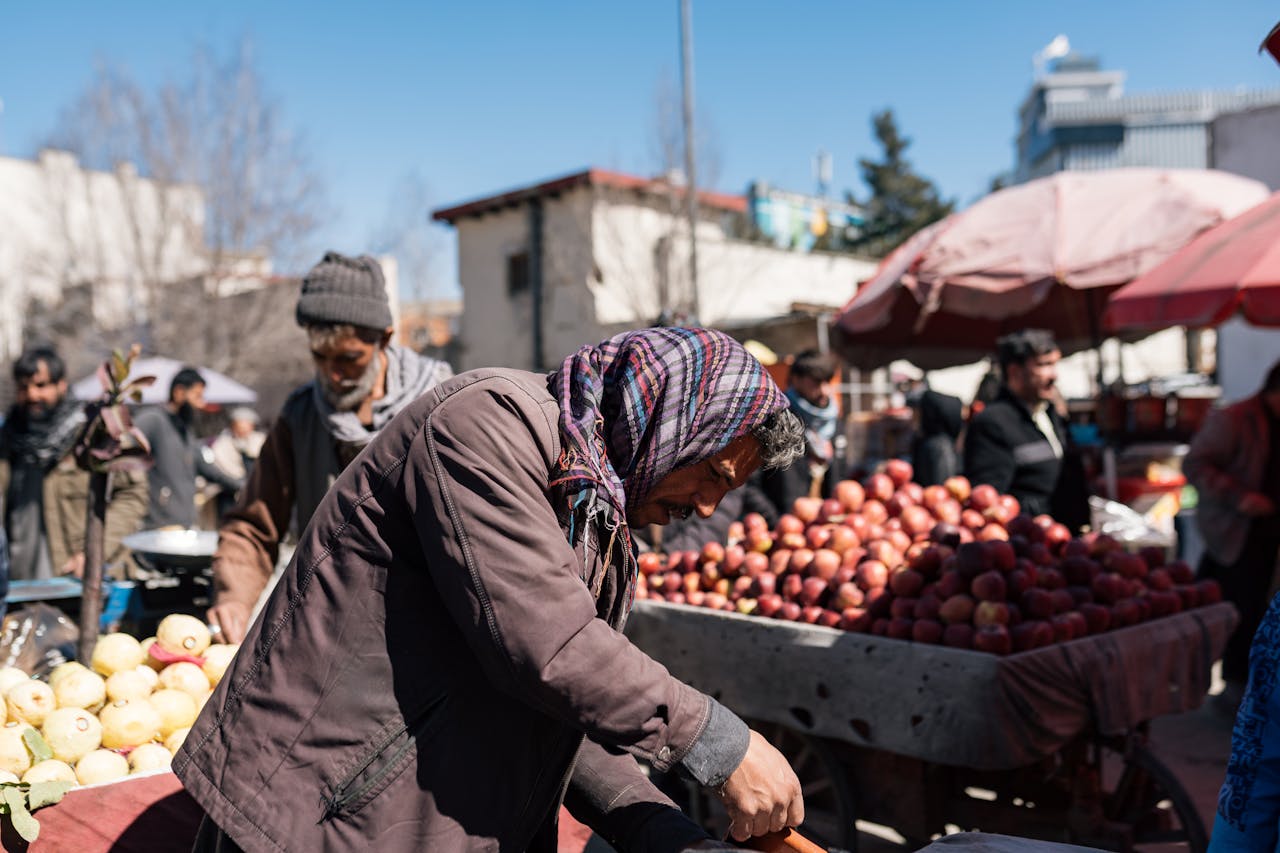
Afghanistan is facing multiple, overlapping crises that threaten how food moves from producers to people who need it. Climate extremes such as floods and droughts, ongoing conflict, and unstable markets are disrupting roads, bridges, and supply corridors. As a result, millions of Afghans struggle to access enough food, while humanitarian organizations must operate with shrinking resources and limited on‑the‑ground access.
This project focuses on enhancing the toolkit used by aid agencies to anticipate and respond to problems before they become full‑scale emergencies. Led by the United Nations World Food Programme and the REACH Initiative, it builds on an existing platform called AF‑PULSE, a real‑time mapping system that tracks risks to food supply chains across Afghanistan. The next generation of AF‑PULSE will bring together satellite data, weather forecasts, field observations, and machine‑learning tools to detect early warning signs of disruption.
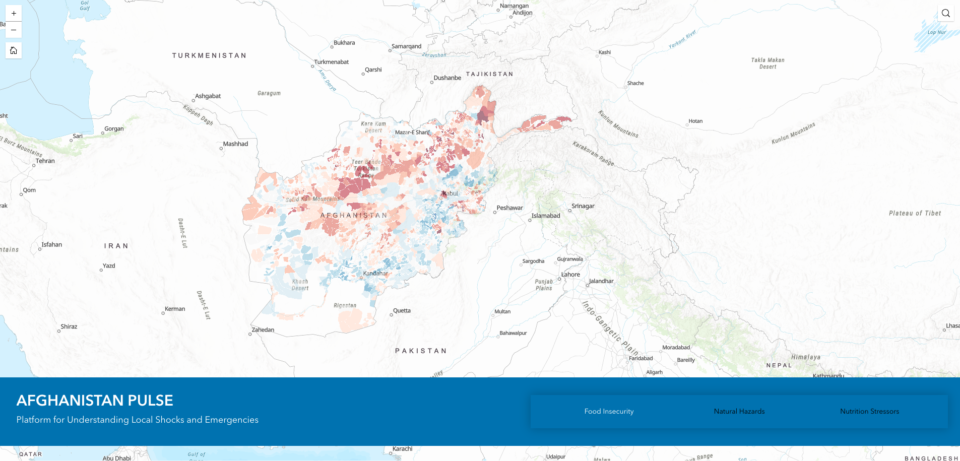
A key innovation is the use of GeoAI to enable the system to interpret information coming directly from communities, associate this information with specific locations, and verify the information against other data about those places. Using this system, field staff and local reporters can send short text messages and photos using mobile data‑collection tools. Artificial‑intelligence models will automatically extract key information—such as reports of flooded roads or damaged bridges—in multiple languages, and analyze images to identify hazards like debris or standing water. These reports can then be checked against satellite and meteorological data, assigned confidence scores, and added to live operational maps.
Over time, the system will learns from each verified report, steadily improving its ability to recognize real disruptions and filter out noise. The result is a continuously improving, community‑informed early‑warning system that again leverages GeoAI models to simulate hazard-to-impact pathways and show where food supply routes are at risk and predict where alternative routes may still be open.
Outcomes
This project will produce an updated operational prototype of the AF-PULSE Platform and a set of open source resources to support the humanitarian community in building on this work. Planned open source resources include sample data schema, open-source Python scripts for data ingestion, analysis, and API integration, technical documentation of methods, models, and data standards, and training materials. The project will also make research brief of findings conflict and market disruption pathways publicly available. Updates on these products will be added as the project progresses.
Team
- Ms. Gabriela Luz — World Food Programme
- Mr. Moataz Elmasry — World Food Programme
- Mr. Michael Manalili — World Food Programme
- Ms. Wahida Azizi — World Food Programme
- Mr. Berry Swana — World Food Programme
- Mr. Imran Ahmedani Khan — World Food Programme
- Mr. Homayoon Yousofi — World Food Programme
- Mr. Hikmatullah Saqib — World Food Programme
- Ms. Meike Palinkas — REACH Initiative
- Mr. William Paja — REACH Initiative
- Mr. Jawad Keshawarz — REACH Initiative